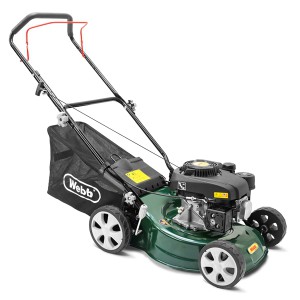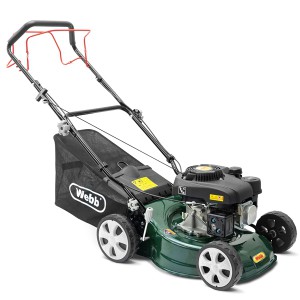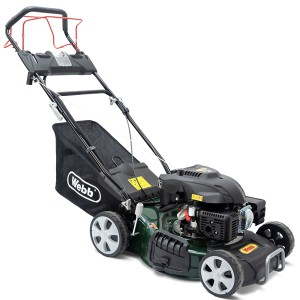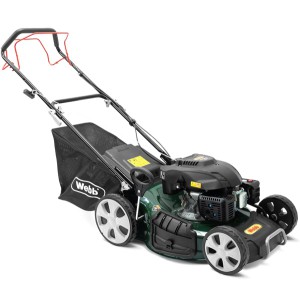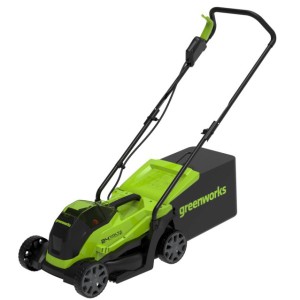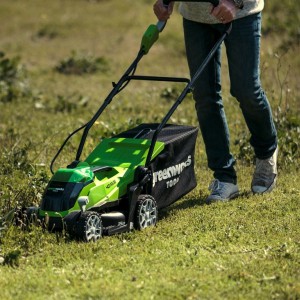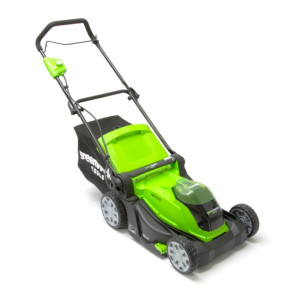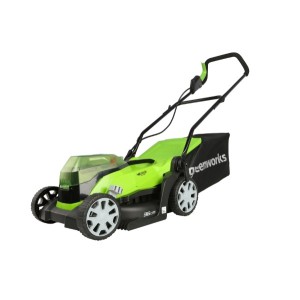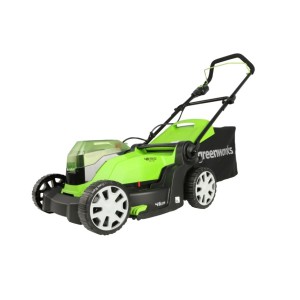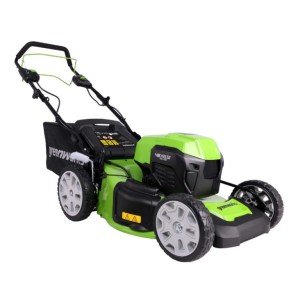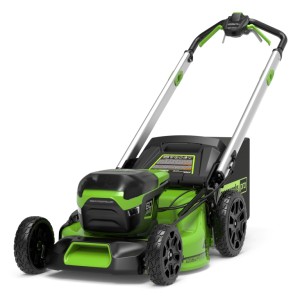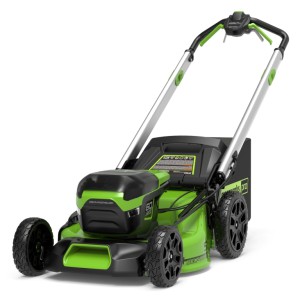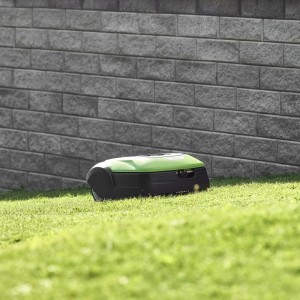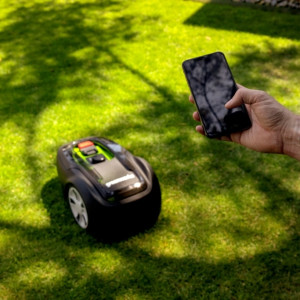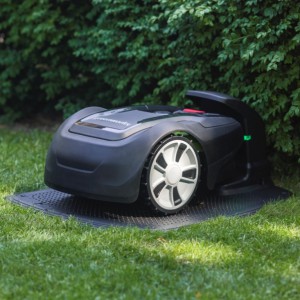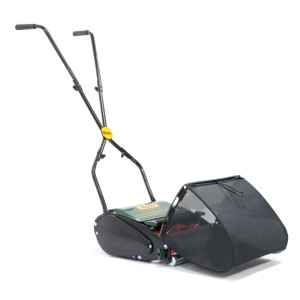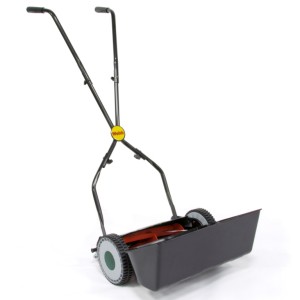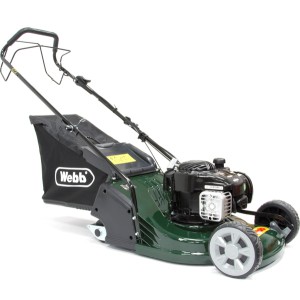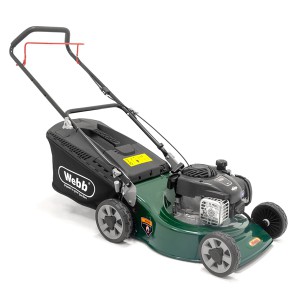
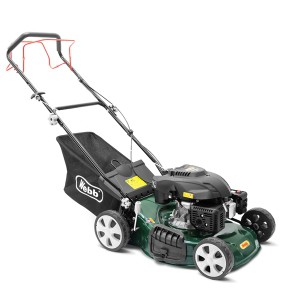
Lawnmowers for every budget! You’ll find all the leading lawnmower brands including Bosch, Flymo, Atco and McCulloch along with our FREE delivery to UK mainland and discounts available across a huge range of our lawnmower products. From manually driven to petrol lawnmowers and ride-on tractor lawnmowers you’ll find a big range available from us. Remember to take a look at the new products for this month below, we’re always looking for better products in our lawnmower range to provide you with.
Manual Lawnmowers |
Electric Lawnmowers |
Petrol Lawnmowers |
Ride On Tractor Lawnmowers |
£329.95 SAVE £20.00 (6%)
New for 2013, the McCulloch MCM53-140WF Lawnmower is McCulloch's new generation of...[more]
| £64.95
The SandriGarden SG932E Electric Mower is feature packed and excellent value....[more]
| £64.95
If you are conscious of the environment then this mower maybe just the thing for you....[more]
|
We are often asked which type of lawnmower is the best and the honest answer is always that it depends on what you want to use the lawnmower for. That might sound like a strange thing to say, after-all you buy a lawnmower to cut grass. That is however the only common factor amongst the different types of lawnmowers, as the lawnmower you choose will give you very different results.
Factors to consider when choosing the right lawnmower for you include price, power, terrain and finish. Most people have a budget when they set out to buy a lawnmower. Make sure your budget is realistic, you cannot expect to spend £40 on an electric hover mower if you need to cut a 2 acre paddock. Likewise, there is no need buying a 5hp petrol lawnmower if you have a postage stamp size lawn.
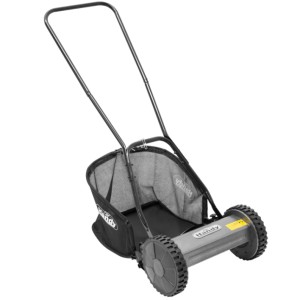
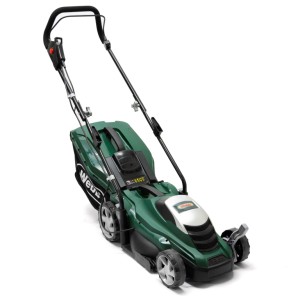
The power you need will depend on how large your garden is and how often you cut your lawn. Small lawns that are cut frequently only require a small electric lawnmower such as the Flymo Chevron or the environmentally friendly manual lawnmowers such as the Handy Hand Mower.
Larger lawns that are cut frequently can be easily maintained by larger electric lawnmowers but if you like to leave longer gaps between cuts or you have a lawn that contains a lot of rye grass, you should consider a petrol lawnmower for two reasons. Firstly the cutting performance is better than an electric and secondly, on a large lawn it is safer to work without power cords and extension cables trailing across your garden.
For very large plots or paddocks, a ride on tractor mower makes life a lot easier. The terrain of your garden can influence the type of lawnmower you need. If you have a lawn with a short steep bank, a lightweight hover mower would allow you to cut the bank far quicker than a lawnmower on wheels. If you have a very uneven lawn, a tough petrol rotary lawnmower such as the McCulloch M53 with its large rear wheels and large height adjustment will get the job done with minimal fuss.
A smooth lawn broadens your choice of mower and helps to avoid unnecessary damage to your machine. Remember that damage to your lawnmower caused by running over exposed rocks or tree roots can invalidate your warranty, so taking the time to repair damaged lawns is a worthwhile investment.
The final consideration is finish. There are two cutting methods, rotary blade and cylinder blades. Rotary blades slash grass stems as the single blade rotates horizontally at high speed. This slashing method is very effective at cutting through long and tough grass but the blades can become blunt quickly which can fray the grass stem giving a poor quality finish.
Cylinder lawnmowers cut the grass in a very different way. Cylinder blades rotate cylindrically and contain 3 or more cutting surfaces that come into very close contact with a cutting plate at ground level. The grass stems get caught between the blade and cutting plate and the blade of grass is snipped similar to a scissor action. This method significantly reduces the amount of damage done to the blade of grass, therefore giving a superior finish to the lawn. The cylindrical cutting system does not work well in damp conditions or where tough rye grass in present in the lawn.
THE BEST TIME TO CREATE A NEW LAWN & PREPARATION NEEDED
Ideal seasons are Spring or early Autumn. Measure out the area required. The ground must be pre-prepared in advance to remove stones and weeds. Kill off any resistant grass/weeds using a general purpose weedkiller but don't use one which states ' Do not use where plants are to be grown', or 'Do not allow to drift onto planted areas' - you don't want to kill off your new grass.
Preferably dig or rotavate top soil between 15cm to 25cm, removing debris. Rake it, then level either by treading it flat with a board, or with a roller if you own one and the area is larger. If you have some handy, a sprinkle of bone meal across the surface of the soil would be beneficial.
LAYING A TURF LAWN
Don't buy the cheapest turf on offer - ask the retailer why difference in price. (The turf is probably in rolls so you may not be able to easily inspect it). Cheaper turf may contain hard wearing rye grass, but conversely may contain weeds and pests. Use a well known turf supplier, and ask questions.
The season for laying is important because you want optimum growing conditions, but not searing heat or risks of frosts. Early Spring or early Autumn are the best times. Avoid doing the job on a heavy rainy day or when the ground is still frozen (as in the Spring of 2013) . Don't have advance delivery. Although the turf will keep for 3-5 days on average, laying it on the day it is delivered is what you should be aiming for.
Start by laying the first line along an edge, then put your plank onto that row to help distribute your weight, helping the rolls to bed down, and lay the second row, making sure you stagger the joins- this is important. You will soon have all the rolls laid.
Give the whole area a good watering, and keep children and pets off your new lawn for six weeks if possible -encourage them to use your paths. Your lawn will need regular watering until established - give it a good soaking when you do water - that is far better than 'little and often' - definitely not the maxim to follow to encourage a healthy lawn to take off. Never water when the sun is high. Also if there are hosepipe bans in your area you wont be able to use your sprinkler, so be aware of weather conditions before you set about laying your lawn. Once established, lawns are very resilient, and will bounce back from drought etc. (Though they refuse to bounce back if you have a bonfire on a patch of your lawn - you will need to re-seed or re-turf that area!)
USING LAWN SEED
A cheaper option than turf - but seed requires patience! You won't be able to use it for up to 3 months, and you will need to keep children playing football etc off it for up to nine months. The young grass shoots are delicate.There are a wide range of packet seed types available dependent on your need - Fine lawn, shady lawn, fast growing seed, and family lawn. Be realistic. We all love to see a fine lawn, mown to perfection - but if your lifestyle involves children, pets or other wear and tear, then put back the fine seed and opt for a more hard wearing type.
You must ensure the ground is not still frozen, so delay seeding till early April up until May. Early Autumn is also possible, as long as we aren't in drought conditions
Infilling with seed is very common where lawns have been damaged for whatever reason, and seed is excellent for this purpose.
Once your ground is prepared in the same way as if you were laying turf, start sowing from the end of your garden, spreading as evenly as possible, according to the seed manufacturer's instructions, usually at a rate of approx 50g for each square metre. If you have a spreader this will give you a more accurate spread, but we don't all own one. It's worth weighing on the family kitchen scales to seee what 50gm looks like, and, having marked out a square metre before you start, spread it thinly. This will give you a good idea of how to spread the entire lawn. If the instructions advise it, you may wish to use a face mask to avoid breathing in seed dust as you go along.
Then use your rake to cover the seeds with a thin layer of soil. Your seeds are highly desired by the bird population, so keep them hidden. If you are only sowing a small area you may be able to cover it with cheap netting fixed onto canes to deter wildlife and family/pets, but this wont be practical on a large scale - but worth it if you are planting a fine lawn. Do water well, but don't wash the seeds away with your enthusiasm .A sprinkler setting on your hosepipe will be much better than a fast jet.
ONGOING - WATERING AND MOWING
Remember the maxim 'little and often' doesn't apply to newly sown lawns. Water well, with a sprinkler action if possible. As to your mower - remember to use a circuit breaker if you are using an electric lawnmower - essential for your safety.
Delay mowing for as long as you can bear to look at your rapidly growing plot. Wait until your new lawn grass is at least 2" high but preferably 3" (8cm), and always start off (this applies to the start of every mowing season as well) with your mower blades on the highest setting. Other family members may complain that the grass doesn't look as if it has been cut - but you are following rules set in stone to achieve the best results.
You can gradually lower the blade height as your lawn matures, but if we have a very hot spell, raise them again, and don't cut at all in very dry or drought conditions. You can stop mowing when the grass stops growing - usually late autumn, but dependent on winter weather conditions you may even hear your neighbours mowing on Boxing day! However never mow when there is frost.
Give your mower its annual service during the cold months of January and February. If you take it to a dealer, don't leave it too late into the Spring to get it serviced, because you will be joining a queue with others who have forgotten.
KEEPING THE EDGES TIDY
You will need either (or preferably both) a pair of long handled lawn shears and a long handled tool with a half moon head to give your lawn that perfect finish. Untidy or overgrowing edges ruin all your attempts to achieve a perfect lawn, even if you have achieved the longed for striped effect with your mower. Don't scrimp on the edges. Other tools to do this job are available on the market, but these mentioned are your staple needs.
FEEDING AND CARING FOR YOUR LAWN THROUGH THE SEASONS
Lawns will grow if you never feed them, but to achieve the perfect lawn, not one full of dandelions, treefoil, buttercups and daisies, you will have to give it some maintenance. It's quite a pleasant job on fair weather days.
Your lawn will need a feed in Spring and again in the Autumn. You can use granules or a liquid feed- a liquid feed will be absorbed more quickly. If your lawn is showing signs if weeds (and whose isn't) incorporate a dual function weed and feed product. Do use one specifically for lawns - there are many on the market to choose from.
In the autumn use a specially designed tool to aerate your lawn, or if you have time and energy, this task can be done by pushing in and out with a garden fork every few inches, creating holes into which sand can be swept. This is essential for clay soils which can become very waterlogged, but all lawns will benefit.
Hand weed - ensure you also extract the root system . Some weeds spread across an area -find the centre and extract the roots.
Moss is a nuisance, but not uncommon. Apply moss killer, and remove the dead moss with a rake. If you have any sizeable dead patches they will need to be re-seeded or re-turfed.
RAKING YOUR LAWN
Essential to remove dead thatch, this should be done at least once, or preferably twice a year. Depending on weather conditions, mid March and late September are generally good times. Investing in an electric lawn rake, which is inexpensive, and in truth worth every penny, will make this an enjoyable job. Mow your lawn first, then rake. You may be amazed at how much thatch is actually thrown into the collecting box.
We hope you have found this article of help - if you are needing to replace your lawnmower, or purchase other tools and equipment the staff at Garden Oasis are on hand to assist you to choose the best model for your needs. There are also articles on the Lawnmower pages to assist you with your decision. You don't even have to leave the comfort of your own home or garden. Ordering is a simple phone call or click away, and fast delivery is free to your home for most UK postcodes.
Happy gardening from all the Team at Garden Oasis.