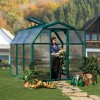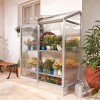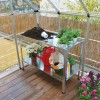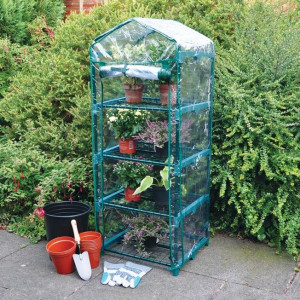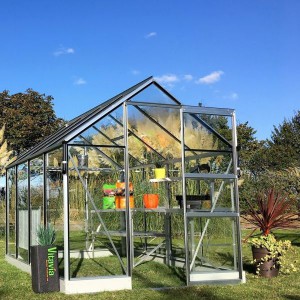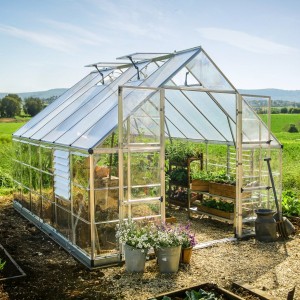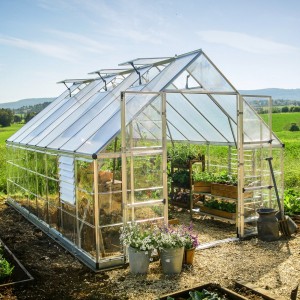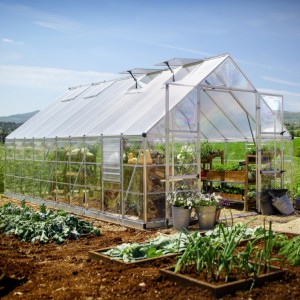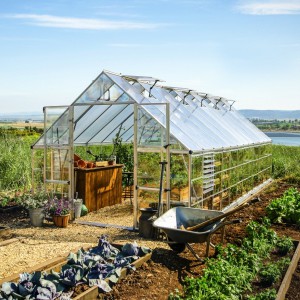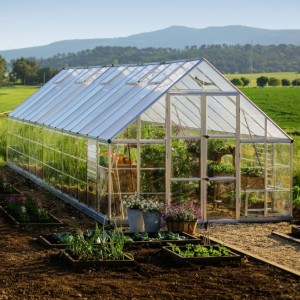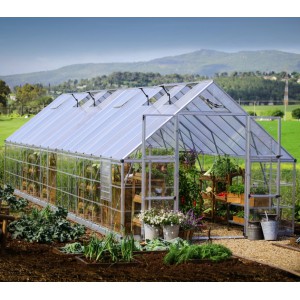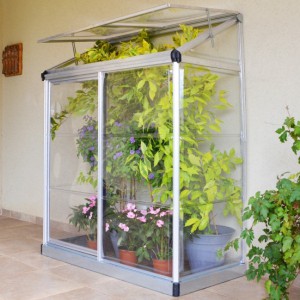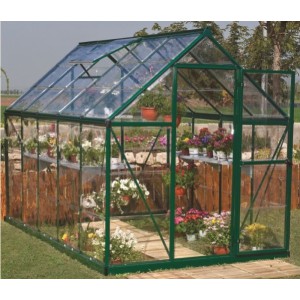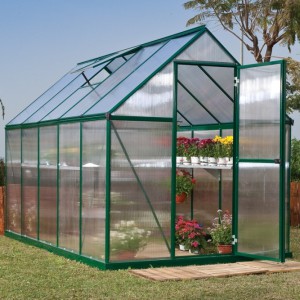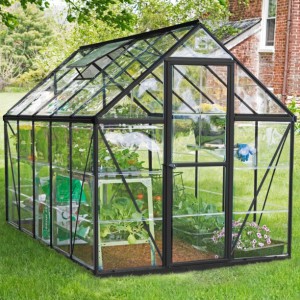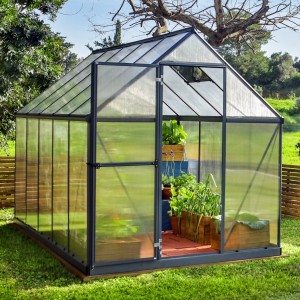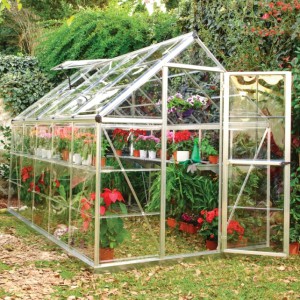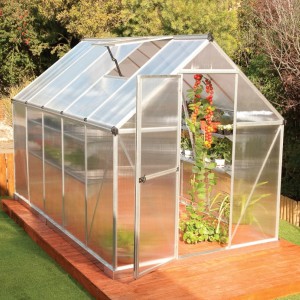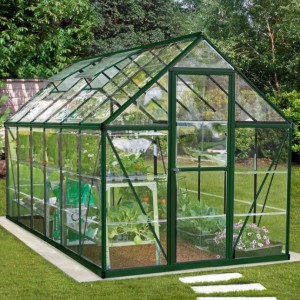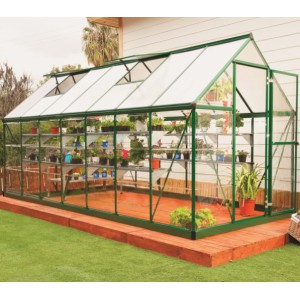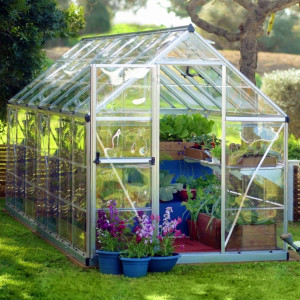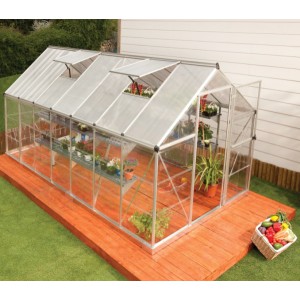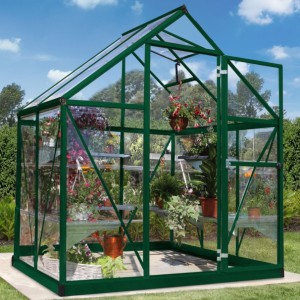
Garden Oasis offer Greenhouses from some of the UK's leading manufacturers including Palram, Rion and Forest. Palram greenhouses are made from unbreakable polycarbonate glazing and rust proof aluminium frames for a stylish appearance and a long maintenance free life. Rion Greenhouses benefit from thick heavy duty resin frames combined with unbreakable polycarbonate glazing for a truly robust greenhouse that is easy to assemble. Check out the innovative Grow & Store Greenhouse which combines a greenhouse and shed in one easy to assemble building. Delivery is fast and free of charge on our Greenhouses.
£2,499.00 SAVE £390.00 (13%)
This stunning Glass House from Forest is designed to create a focal point in your...[more]
| £1,999.95 SAVE £500.00 (20%)
The Palram 12 x 12 Americana Greenhouse is an extra large greenhouse with a barn...[more]
| £369.95 SAVE £160.00 (30%)
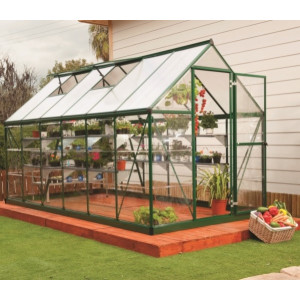
The Palram 6 x 10 Green Harmony Greenhouse is a smart new design that combines strength...[more]
|
£369.95 SAVE £80.00 (18%)
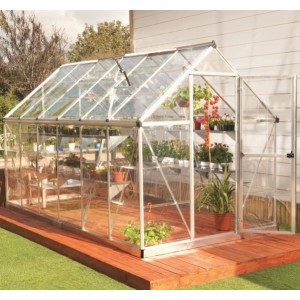
The Palram 6 x 10 Silver Harmony Greenhouse is a smart new design that combines...[more]
| £239.95 SAVE £100.00 (29%)
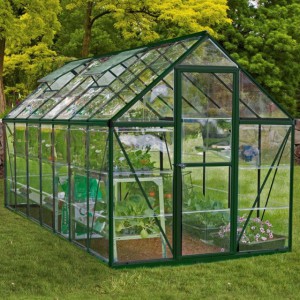
The Palram 6 x 4 Green Harmony Greenhouse is a smart new design that combines strength...[more]
| £249.95 SAVE £90.00 (26%)
The Multiline 6ft x 4ft Greenhouse from Palram uses 4mm twin ply polycarbonate glazing...[more]
|
£239.95 SAVE £60.00 (20%)
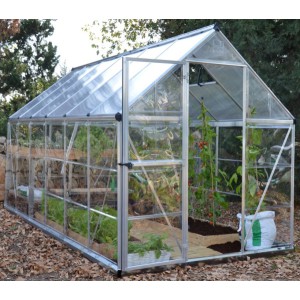
The Palram 6 x 4 Silver Harmony Greenhouse is a smart new design that combines strength...[more]
| £289.95 SAVE £110.00 (28%)
The Palram 6 x 6 Green Harmony Greenhouse is a smart new design that combines strength...[more]
| £289.95 SAVE £90.00 (24%)
The Palram Multiline 6ft x 6ft Greenhouse uses 4mm twin ply polycarbonate glazing that...[more]
|
£279.95 SAVE £70.00 (20%)
The Palram 6 x 6 Silver Harmony Greenhouse is a smart new design that combines strength...[more]
| £289.95 SAVE £70.00 (19%)
The Palram Silverline 6ft x 6ft Greenhouse uses virtually unbreakable 1mm thick clear...[more]
| £329.95 SAVE £120.00 (27%)
The Palram 6 x 8 Green Harmony Greenhouse is a smart new design that combines strength...[more]
|
£319.95 SAVE £80.00 (20%)
The Palram Multiline 6ft x 8ft Greenhouse uses 4mm twin ply polycarbonate glazing that...[more]
| £319.95 SAVE £80.00 (20%)
The Palram 6 x 8 Silver Harmony Greenhouse is a smart new design that combines strength...[more]
| £569.95 SAVE £130.00 (19%)
The Palram 8 x 12 Balance Greenhouse is a smart new design that combines strength with...[more]
|
£699.95 SAVE £200.00 (22%)
The Rion 6 x 10 Eco Grow Greenhouse is a smart new barn design that combines strength...[more]
| £469.95 SAVE £130.00 (22%)
The Rion Eco Grow Greenhouse is a smart new barn design that combines strength with...[more]
|
When choosing a greenhouse, one of your main considerations should be the type of glazing used in construction. Polycarbonate is up to 200 times stronger than glass and half its weight. It really is an incredibly strong material. Some gardeners are still unaware of its virtues, although it is widely used in some European Countries.
It is available as single wall, and twin wall 300mm & 400mm thickness.
Horticultural glass is usually 3mm thick and has an 'R' value (thermal insulation rating) of 0.93. Clear single layer polycarbonate is only slightly lower at 0.83 - bubble wrap or fleece over the tenderest plants in the depths of winter more than compensates for this. However 4mm twin wall polycarbonate has an R rating of up to 1.42, so you can keep your energy bills lower too, if you heat your greenhouse.
As hot air rises, twin polycarbonate is certainly ideal for the roof of your greenhouse.
Twin walls will allow slightly less light through, but as it diffuses the light passing through the twin wall, the light will penetrate in areas that would otherwise not be reached - a bonus.
Polycarbonate glazing in greenhouses is much safer especially if there are children around as a stray football will not break the polycarbonate. If you have a greenhouse on an allotment, polycarbonate greenhouses are less prone to vandal damage as stones will not break the glazing.
Your greenhouse will need a level site. Most greenhouses are installed over soft ground so that you can plant in the ground or put down gravel beds which are ideal for cultivating new plants, however you can install a greenhouse on a hard concrete base if you prefer. Modern gardens are often small and you may be limited as to where you can place your greenhouse, but keep the following points in mind:
Once you have bought your greenhouse, you will want to install some shelving and a workbench. Some greenhouses are available with the option of fixed shelving however most people prefer greenhouse staging, which is free standing shelving that can be moved or altered to best meet your requirements. A workbench or potting table will be a big help when it comes to potting up and labelling your tender plants.
When installing your greenhouse on soft ground, it is a good idea to lay a row of slabs down the middle so that you have a firm clean surface to stand on when working in your greenhouse. A gravel bed either side of the slabs will keep the inside of your greenhouse clean whilst allowing free drainage. Gravel beds make the ideal base on which to sit grow bags for your tomatoes.
You will also need shelving to store your ever growing pile of plant pots and seed trays and your tools, gloves, watering can and other essential equipment.
You may even want a comfortable stool. Greenhouse gardening should be as enjoyable as possible - it is a hit and miss affair as with all types of gardening. Trial and error play a major part, and over time you will achieve higher levels of success and satisfaction at what you have achieved.
Buy a thermometer, and remember proper ventilation, temperature and humidity are essential for your plants to grow successfully. Where to site your Greenhouse has been covered in another section, but avoid shaded, north facing or very windy spots. South or South West parts of garden are best if possible.
A greenhouse heater is essential if you want to grow tropical plants all year round. Paraffin heaters are cheap to run and can be positioned anywhere in the greenhouse, or for convenience, a thermostatically controlled electric heater will take some of the guess work out of maintaining the right temperature for your plants. Bubble wrap or fleece is another insulating method widely used, and is reusable and cheap to obtain.
If you are starting to shiver then so are your plants! Greenhouse heating is important, especially for young, tender plants. You need to protect your tender plants and seedlings which you have lovingly cared for and nurtured throughout the winter months.
Plants don't need high temperatures in the winter but they do need protection from frost. Some plants, especially tropical plants, will die if the temperature drops below 10 degrees, so a greenhouse is not the best place to keep them during the winter. They should be moved into the house, ideally in a heated conservatory. Most plants however are happy with a temperature of between 2 and 7 degrees. As always with gardening it's trial and error.
Here are the three most common methods to keep your plants warm.
1. Paraffin heaters are the long standing Gardeners favorite. Position your paraffin heater where the air can circulate, and check your thermometer to make sure they are providing enough warmth. If not, you may need to run two or more depending on the size of your greenhouse and the external temperature. Make sure the heater is on a firm, flat surface, and nothing can fall onto it. Garden Oasis stock a range of paraffin heaters, and some only need refilling every 7 days.
2. For maintenance free heating, an electric heater that is thermostatically controlled will ensure your plants are kept warm when the temperature drops below a certain level. Fan heaters will circulate the warmth but these can be expensive to run and you must ensure they doesn't come into contact with water either.
3. You can insulate with bubble wrap and/or fleece (remove fleece during the day as it blocks light and ventilation). You may want to use bubble wrap around your expensive external glazed patio pots as well to help prevent frost damage.
THE POTENTIAL DESTRUCTIVE FORCE OF HIGH WINDS TO GREENHOUSES
We hope the following will be of assistance to you.
All greenhouses, whatever their construction and whether inexpensive or top of the range models, are at risk from the force of severe winds, over which you have no control. Extreme weather conditions are becoming more prevalent, and no manufacturer of greenhouses in Britain will provide a warranty for damage caused by wind. You may want to check your Home Insurance, as this may provide cover for a greenhouse, or if not may have the option to add on garden items such as sheds and greenhouses.
High winds can quickly flatten a fence but it can also cause a lot of damage to your greenhouse, blowing out the glazing or even lifting it from its base. The wind outside puts a pressure or 'lifting force' on the structure. If it penetrates the greenhouse via an open door or roof vent it will attempt to force the walls and roof off. However, this is Britain, and we don't let the weather conditions deter us from partaking of our national pastime, so read on.
WHAT STEPS YOU CAN TAKE TO PROTECT YOUR GREENHOUSE. There are several things you can do, some pre-installation and others that you can do to minimise the risk of damage to a greenhouse that is already installed.
MINIMISING RISK OF WIND DAMAGE BEFORE INSTALLATION
MINIMISING RISK OF WIND DAMAGE TO ALL GREENHOUSES
We hope these suggestions are of assistance to you. No method is totally foolproof, but we do advise that you take preventative methods rather than risk unnecessary damage and expense. Wind is unpredictable so the more preventative measures you can take to protect your greenhouse, the safer it will be when the next storm rolls in.